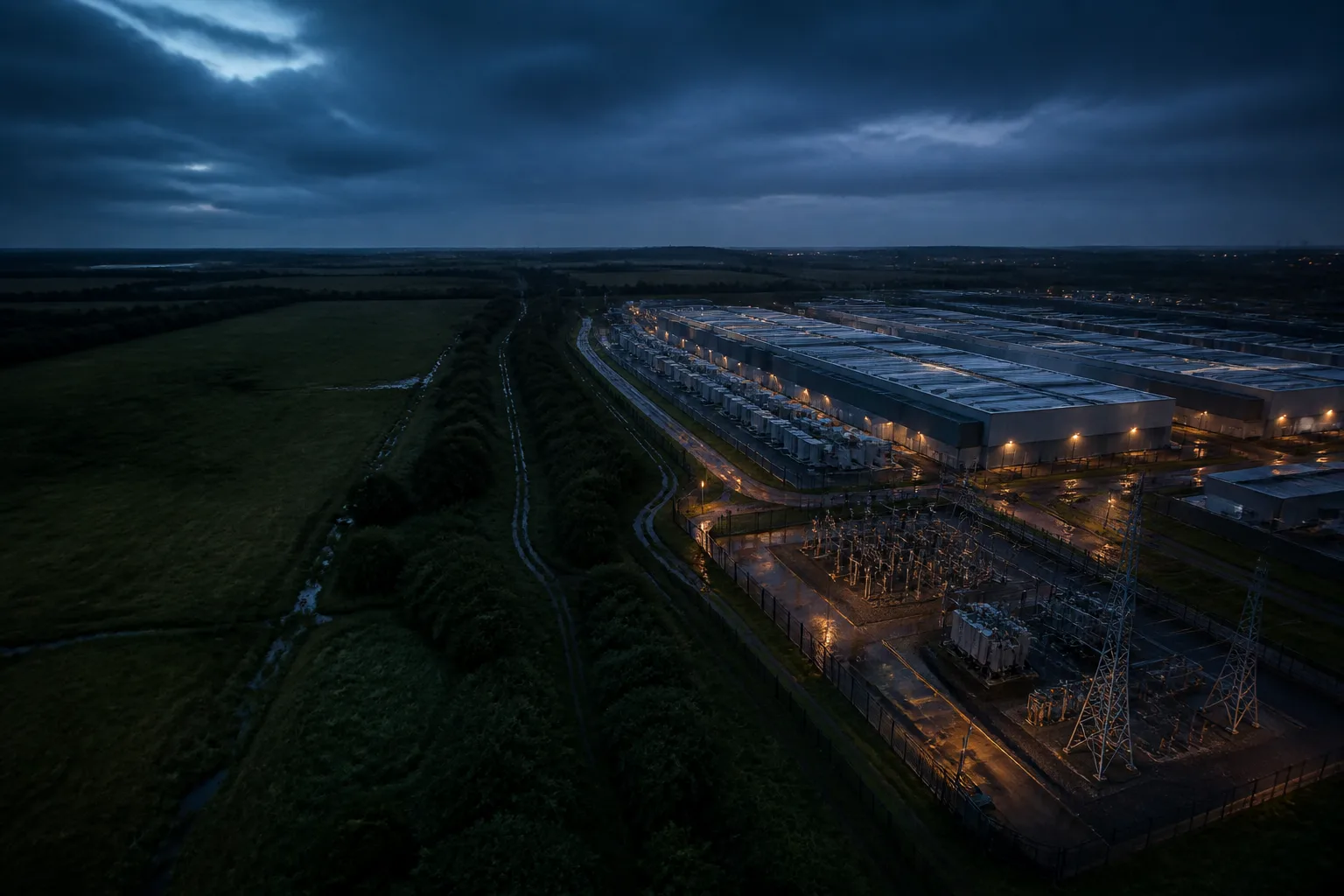
Finding Land for Data Centre Development
Data Centre Axis does not publish open land listings. We review submitted requirements against independent research, provide individually scoped briefs, and arrange managed private introductions where both parties agree to speak.
Public directories for UK Data Centres and Australian Data Centres list researched facilities and projects. Outside the United Kingdom and Australia, enquiries are reviewed individually against available research rather than through an open directory listing. Any introduction proceeds privately where both parties agree. Grid viability and technical diligence remain with the parties and their independent advisers.
Diligence Questions for Prospective Sites
Evaluating data centre land requires technical, planning, and utility diligence before entering contracts. ‘Powered land’ is an industry term rather than a formal certification. Sellers use it to describe sites with secured power reservations, applications in progress, or simple proximity to transmission lines. Buyers must examine the utility evidence and connection status directly:
- Grid capacity and connection timing: What is the distance to the nearest transmission substation? Does the parcel hold an accepted grid connection offer, an application in progress, or informal utility advice? What is the connection voltage, available capacity, and confirmed energisation date?
- Planning permissions and zoning: Does the land have planning consent or permitted development rights? Will the project need a local plan allocation, rezoning, or a special use permit?
- Fibre proximity and route diversity: Which carriers operate dark fibre along adjacent roads? Can the site support diverse fibre entries from separate boundary points to avoid shared trench risk?
- Substation space and site access: Does the parcel provide sufficient contiguous land for high-voltage substations, transformer bays, and switchrooms? Do wayleaves, pipelines, or overhead cables restrict building footprints?
- Acoustic and environmental constraints: How close are residential boundaries? What acoustic attenuation will back-up generators need? Does the land sit in a flood zone or require surface drainage works? Are there ground contamination issues or flight path restrictions?
Distinguishing Land Parcels from Operating Assets
Acquisition strategies reflect development timelines, capital, and risk:
- Undeveloped land: Greenfield or brownfield plots requiring planning permission, substation works, and utility energisation. This offers design flexibility but requires longer lead times. See broader acquisition approaches under Data Centre Land.
- Powered shell and turnkey capacity: Existing facilities or fitted halls with active power connections and cooling plant. This suits near-term compute deployments through Colocation.
- Stabilised operational assets: Completed facilities let to enterprise or hyperscale tenants, generating rental yield. Investors evaluate these on tenant covenant strength and lease length through Data Centre Investment.
Managed Introductions and Scoped Briefs
Data Centre Axis does not operate an open property exchange. We manage introductions discreetly:
- Requirement intake: Buyers register target regions, power capacity, schedules, and site size via Register a Site Requirement.
- Asset submission: Landowners register broad location, acreage, and grid indicators via Submit a Land Asset.
- Research review: Requirements are reviewed against independent research. Where helpful, we supply an individually scoped research brief on local conditions.
- Managed introductions: Where development objectives align, Data Centre Axis coordinates a private introduction. Commercial terms, title checks, and contracts stay between the parties and their independent Advisory teams. Specialist advisory work requires an agreed separate scope.